Will AI Kill Jobs or Create More? A Deep Dive into the Future of Work
Wed Apr 22 2026
By Upstart Hive
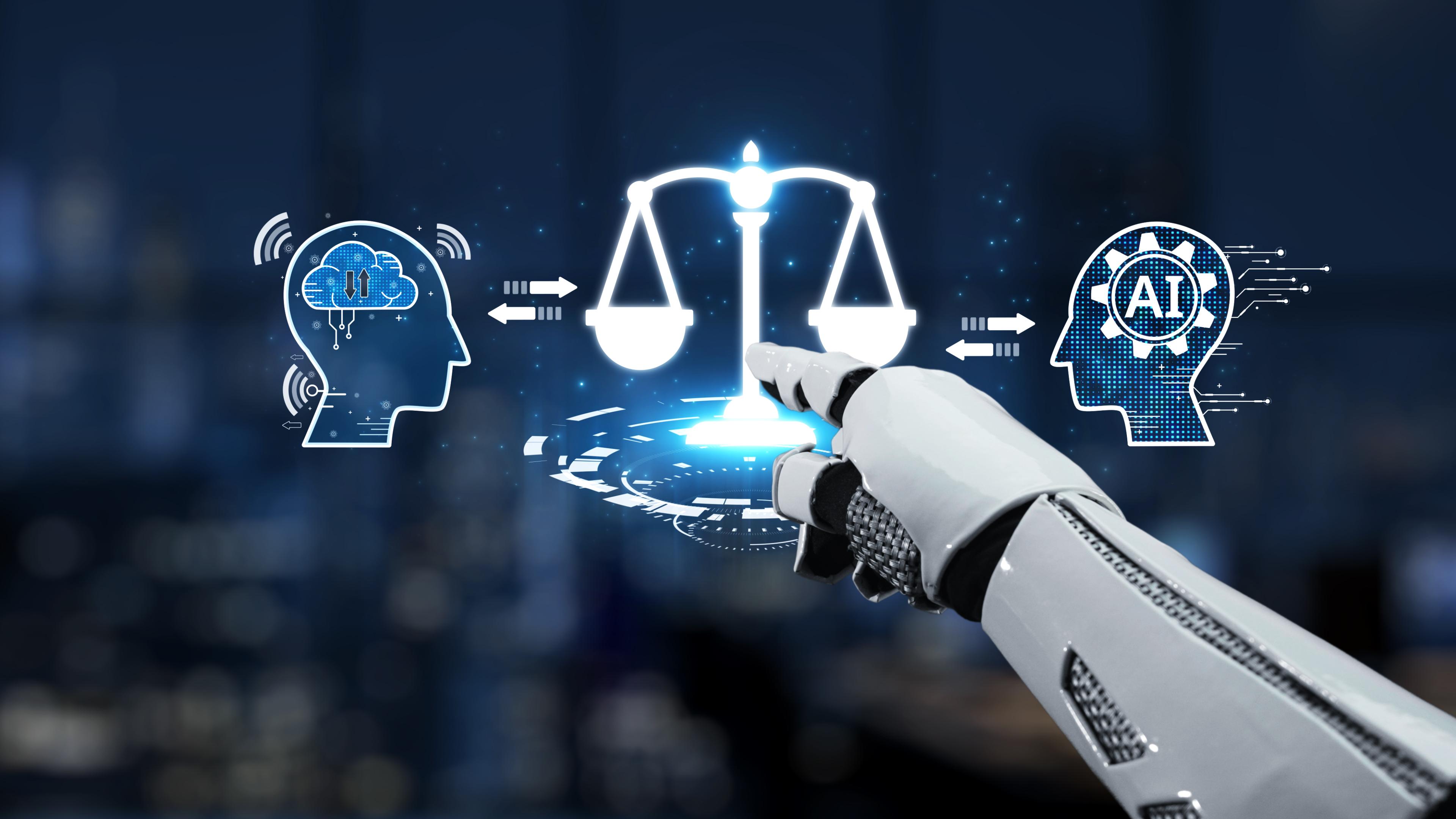
Artificial Intelligence is no longer a distant concept discussed in research labs or science fiction. It has quietly—and now very visibly—entered everyday workflows, reshaping how companies operate and how individuals work. From automating repetitive tasks to generating content, writing code, and assisting in decision-making, AI is rapidly becoming a core layer of modern business infrastructure.
This transformation has sparked one of the most debated questions in today’s world:
👉 Will AI kill jobs—or create more?
The conversation is often framed in extremes. On one side, there’s fear—mass unemployment, machines replacing humans, and entire industries collapsing. On the other side, there’s optimism—new opportunities, increased productivity, and a future where humans do more meaningful work.
The truth, as always, lies somewhere in between.
A Shift That Feels Faster Than Before
Technological revolutions are not new. The Industrial Revolution replaced manual labor with machines. The internet transformed communication and commerce. Smartphones reshaped how we consume information and interact with the world.
But what makes AI different is the speed and scope of change.
Unlike previous technologies that primarily impacted physical labor or communication, AI is now influencing cognitive work—writing, analyzing, designing, and even decision-making. Tasks that once required human intelligence are now being assisted—or in some cases handled—by machines.
For many professionals, this shift feels more personal.
The Growing Anxiety Around Job Loss
Across industries, there is a visible sense of uncertainty.
A customer support executive wonders if chatbots will replace their role.
A junior developer questions whether AI coding assistants will reduce demand for entry-level talent.
A content writer sees AI generating articles in seconds and begins to rethink their position.
These concerns are not unfounded.
Companies are already experimenting with AI to:
- Reduce operational costs
- Improve efficiency
- Scale faster with smaller teams
In many cases, AI doesn’t completely eliminate a role—but it reduces the number of people required for that role. A team of ten may become a team of three, supported by automation.
This creates a subtle but significant shift in the job market.
Not Job Loss—But Job Compression
Rather than wiping out entire professions overnight, AI is causing what can be described as job compression.
Tasks within a role are being automated, which reduces the need for large teams. The nature of work changes, and expectations from employees increase.
A content writer is no longer expected to just write—they must now:
- Edit AI-generated drafts
- Add originality and voice
- Understand SEO and distribution
A marketer is not just running campaigns—they are:
- Using AI tools for targeting
- Analyzing data in real time
- Optimizing strategies continuously
In this sense, jobs are not disappearing—they are becoming more complex and multi-dimensional.
The Silent Creation of New Roles
While much attention is given to jobs being replaced, less focus is placed on the new roles emerging quietly.
A few years ago, roles like:
- Prompt Engineer
- AI Content Strategist
- Automation Specialist
…did not exist.
Today, they are becoming increasingly common.
Companies are now looking for people who can:
- Work alongside AI tools
- Extract better outputs from AI systems
- Integrate AI into business workflows
This shift is creating a new category of professionals—those who are not replaced by AI, but enhanced by it.
A Closer Look at India
India sits at a unique intersection in this global transformation.
On one hand, it has one of the largest workforces in the world, particularly in sectors like IT services, customer support, and operations. These are areas where automation can have a noticeable impact.
On the other hand, India also has:
- A rapidly growing startup ecosystem
- A strong base of engineers and developers
- Increasing access to digital tools and infrastructure
This creates both risk and opportunity.
For example, India’s IT services industry—which has long relied on large teams for repetitive tasks—may see shifts toward smaller, more skilled teams supported by AI.
At the same time, Indian startups are leveraging AI to:
- Build faster
- Reduce costs
- Compete globally
In many ways, AI could level the playing field for Indian entrepreneurs.
The Real Divide: Adopters vs Non-Adopters
The impact of AI is not uniform.
It is creating a divide—not between industries, but between individuals.
On one side are those who:
- Learn AI tools
- Experiment with new workflows
- Continuously adapt
On the other side are those who:
- Resist change
- Stick to traditional methods
- Avoid learning new technologies
The difference between these two groups is already becoming visible.
A designer who uses AI can produce multiple concepts in minutes.
A developer using AI can debug faster and write code more efficiently.
A marketer leveraging AI can test campaigns at scale.
In each case, AI doesn’t replace the individual—it amplifies their capabilities.
The Changing Definition of Work
One of the most profound shifts AI is bringing is in how we define “work” itself.
Traditionally, work was often associated with effort and time. The more hours you put in, the more output you generated.
AI challenges this model.
Now:
- Output is no longer directly tied to time
- Productivity can increase exponentially
- A single individual can achieve what once required a team
This changes how companies think about hiring, performance, and growth.
It also changes how individuals must think about their careers.
Creativity, Strategy, and Human Judgment
Despite its capabilities, AI still has limitations.
It can:
- Generate
- Analyze
- Suggest
But it does not:
- Understand human emotions deeply
- Make ethical decisions
- Create truly original ideas in the way humans do
This means that roles requiring:
- Creativity
- Strategic thinking
- Leadership
- Human connection
…are less likely to be replaced and more likely to become even more valuable.
In fact, as AI handles routine work, human roles may shift toward higher-level thinking and decision-making.
Startups: The Biggest Beneficiaries
For startups, AI is not a threat—it’s a massive advantage.
In the past, building a startup required:
- Large teams
- Significant funding
- Long development cycles
Today, AI enables:
- Faster product development
- Leaner teams
- Lower operational costs
A small team can now:
- Build products
- Market effectively
- Analyze user behavior
…all with the help of AI tools.
This democratization of capability is one of the most powerful aspects of AI.
The Psychological Impact
Beyond economics and productivity, AI is also having a psychological impact.
There is:
- Fear of becoming irrelevant
- Pressure to constantly upskill
- Uncertainty about the future
This emotional aspect cannot be ignored.
Adapting to AI is not just about learning tools—it’s about changing mindset.
Instead of asking: 👉 “Will AI replace me?”
A better question is: 👉 “How can I use AI to become more valuable?”
Education and the Future Workforce
One of the biggest challenges ahead is education.
Traditional education systems are not fully aligned with the pace of technological change. Skills taught today may become outdated quickly.
This makes continuous learning essential.
Future professionals will need to:
- Learn new tools regularly
- Adapt to changing roles
- Focus on problem-solving rather than rote knowledge
The ability to learn, unlearn, and relearn will become one of the most important skills.
So, Will AI Kill Jobs?
The honest answer is:
👉 AI will eliminate certain roles, transform many, and create entirely new ones.
But more importantly, it will change:
- How work is done
- What skills are valuable
- How businesses operate
The real risk is not AI itself.
The real risk is staying the same while everything else changes.
Final Thoughts
AI is not the first technological disruption—and it won’t be the last. But it is one of the most powerful shifts we’ve seen in recent times.
For some, it will feel like a threat.
For others, it will become a tool for growth.
The difference lies in how we respond.
Because in the end:
👉 AI won’t replace people.
👉 People who use AI will replace those who don’t.
And in a world where change is constant, the ability to adapt is the only true job security.